What Is It Caled When You Want to Install an Art Piece
In the modern world where and then many different art forms have been born, adult, explored and fifty-fifty forgotten over time, most no other manifestation of art is so impressive and instantly mesmerizing equally installation art. When you walk into a room where the majority of the space around you lot is actually a part of the artwork, y'all yourself become part of the art. When you see something that shouldn't quite be there and stands out in an obvious manner, and nonetheless somehow fits in the surroundings in a peculiar way, you're probably looking at some other piece of art fabricated past installation artists. Information technology offers and then much more than than a traditional painting, sculpture or any other kind of creativity would. It may engage yous on multiple levels, activating your senses to experience fine art in a new manner; touch, sound, smell as well as vision are explored to convey the artistry of installations. Often, the focus is centered on the thought and the impact of it, rather than the quality of a finished production. Normally, installation art is a purely temporary work of art, but its impact, message and the notion behind it remain forever. Let us further explore this fascinating, engaging, and bewildering art class embodied in installations that will seduce y'all and make you stop to think for a second, and perhaps even make you lot question the notions effectually it, the world and yourself.
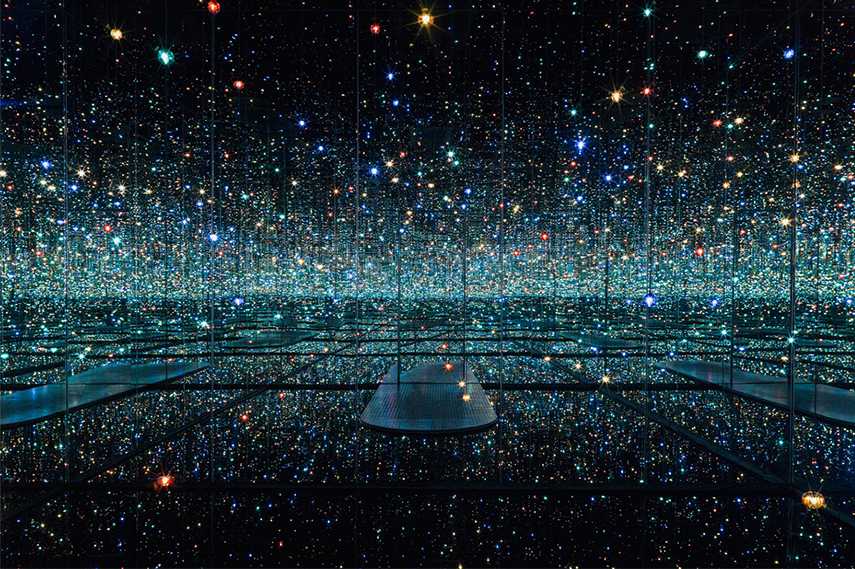
Installation Art - Origins and Development
The origins and roots of installation art are frequently associated with Conceptual art, tracing the steps all the fashion back to artists like Marcel Duchamp and his innovative approach of presenting his readymades; specifically the controversial urinal piece called Fountain from 1917. Other early influences that are considered to take paved the manner for the developing of installation art as such, include the avant-garde Dada exhibitions, various works and assemblage art which notably filled entire rooms, theories of Spatialism, and even some pieces by John Cage. In fact, before information technology even got the name, the earlier version of this groundbreaking fine art movement was referred to every bit the environment, which was started by the American artist Allan Kaprow in 1957. It wasn't until the 1970s that the term Installation began to exist employed to depict works which have into account the viewer'due south entirely sensory experience, or basically fill out an unabridged room of a gallery, leaving infinite and time as its simply dimensional constants.
Either temporary or permanent, installation artworks are constructed within exhibiting venues like galleries and museums, or in public or private locations. Installations can include a very broad range of materials used, natural and man-fabricated alike, giving an individual complete creative freedom over the artwork. With the development of latest technologies, installation art did non stay behind; video, audio, immersive virtual reality, Internet and performance are just some of the media outlets which are oft part of the piece. Site-specific installations are designed to exist and "function" just in the location for which they were created, making them part of the environs. Other artworks could be moved and presented in various locations, non depending on their surroundings. It is this sensory engaging art do that blurs the line betwixt art and life, as Kaprow noted, if we featherbed 'art' and take nature itself every bit a model or bespeak of difference, nosotros might exist able to devise a different kind of fine art…out of the sensory stuff of ordinary life.
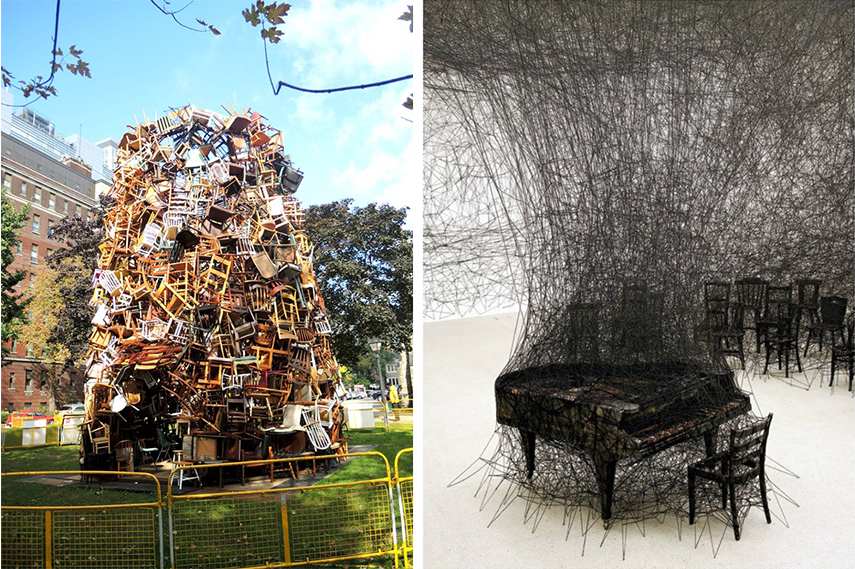
Sculpture or Installation Artwork?
A logical question of the difference between Sculpture and Installation might boggle some critics, and as much every bit some installations may resemble traditional arts and crafts-based sculptures, they practice not fall under the same category. Installation art effectively inverts the principles of sculpture where the slice is designed to be viewed from the outside, experienced as a cocky-independent system of elements. On the other hand, installation works often include and envelop the spectator in the surroundings of the piece, furthermore, information technology could be said that installation art is created with the focus on the viewer, where he/she becomes almost the master discipline of the artwork, taking into account the spectator's involvement and interaction with the art piece. The formalism of the composition falls to the groundwork, bringing the effect of the viewer'south spatial and cultural expectation to a focal point. The sensitively arranged slice creates a dialogue with its surroundings, waiting for the spectator to take in both the cosmos and its surround as an overall immersive brandish.
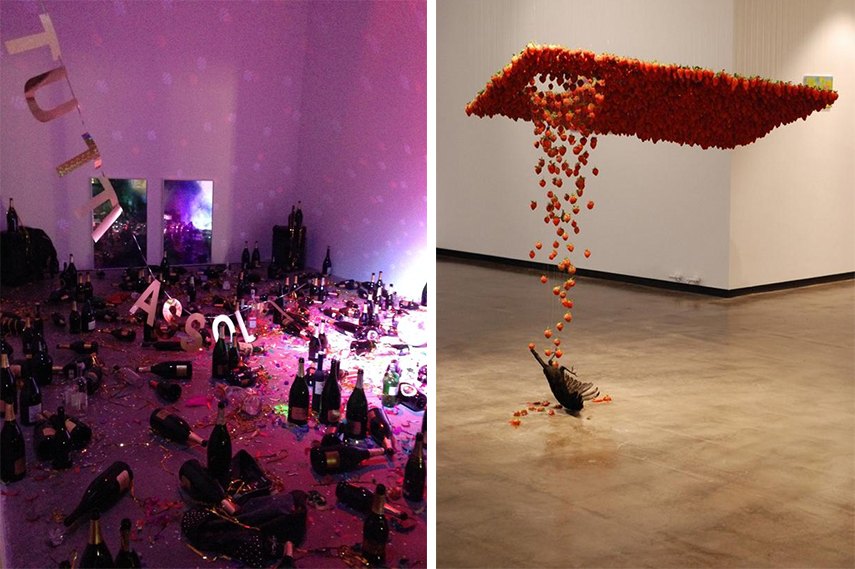
Diverseness of Forms, Locations and Effects of Installation Art
Where can installation art be constitute? Literally – anywhere; from galleries, museums and exhibiting spaces, to public spaces such every bit playgrounds, pedestrian walkways, streets and building sites. Normally, these artworks really practise stand out and grab your attention every bit soon as you see/hear/feel them. However, sometimes it tin exist quite difficult to discern whether you lot're witnessing an creative installation piece, or merely an unintentional scene from everyday life. Like in Bolzano, Italy, when a grouping of cleaners misinterpreted an art installation made past Goldschmied & Chiari at the Museion, and thought they needed to get to work and clean up the area from all the ''garbage'' someone left backside. On the other hand, these 10 gripping street art installations are surely not to exist taken the wrong fashion equally they perplex the passers-by and conspicuously stand out equally out of the ordinary. A sub-category of it, called interactive installation, essentially involves the audience to act on the piece of art, thus making an interactive dialogue betwixt the art and the spectator. From spider web-based installations, gallery-based works, mobile, digital, electronic and all sorts of other structures, the interaction could be based around almost any blazon of medium. The dazzler of installation art lies in its vast range of different materials, mediums and environments used to create a notion-challenging artwork. The unique concept of weaving the art piece around the viewer, and for the viewer, makes it an issue definitely worth engaging in.
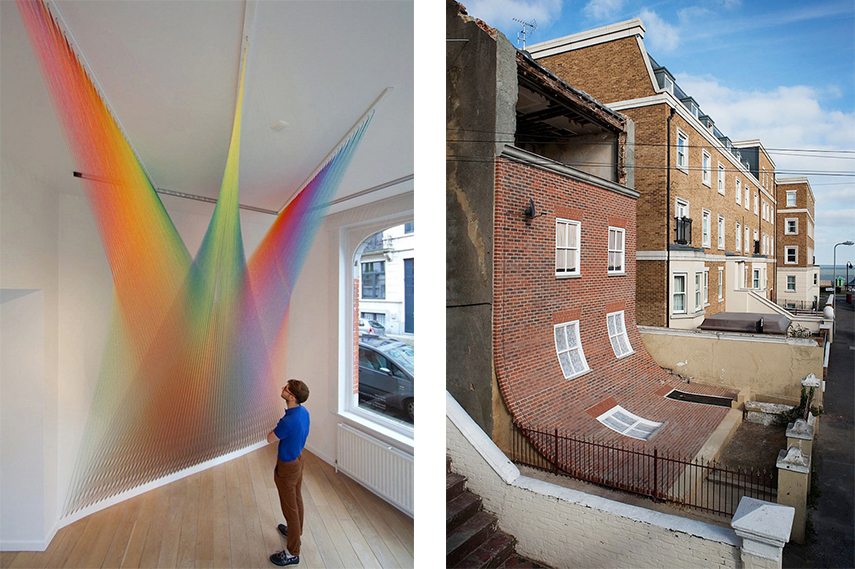
What Happens to the Installations after the Testify?
More and more is the field of art today equated and measured past the status on the art market, all the same, at that place is art which is made and exhibited not for those who wish to exist art collectors or buyers. Logically, these people constitute the majority of the art public, a typical visitor of an exhibition does non look at the piece on display as a article. After all, when information technology comes to performance-based, conceptual, installation, or otherwise ephemeral piece of work of fine art, how do you turn a transient feel into something that can be bought and sold? Naturally, 2-thirds of all the artworks sold are paintings, and installation, video, operation, drawing, time-based or conceptual practices account for less than 1% of the market. Even so, non all of the artists who work in the "unsellable" field of installation art dream of making a living from their ephemeral creations. In fact, many of them intentionally wish to thwart the institution of the market, positioning their artwork as a critique of the organisation. For case, Yves Klein's The Void was sold to collectors for a gold money. Later on procuring the receipt of the transaction to the collector, the creative promptly threw the gold coin into the Seine. The said receipts are fifty-fifty at present on display in glass vitrines at the Pompidou Center in Paris. This raises the question of how the scheme of carefully executed certificates, loftier-production value photographs, express edition prints and other ephemera can really play the role of the collectable attribute for the individuals and cultural institutions. It is argued that these items merely produce the appearance of limited access through claims of uniqueness or actuality. This discussion eventually leads to the soapbox of intellectual property and how it is sold and bought.
See more works by Yves Klein on our marketplace!
Essentially, installation fine art is quite problematic and difficult to sell, naturally due to its size, shape and form, which pose a complicated task for any collector. So, what exactly happens with the installation pieces after they're not sold or housed in any gallery or museum? Most of the time, after the display ends, the artwork is disassembled and either returned to the creative person'southward studio or placed in storage. On the other hand, some artists such as Terence Koh, tend to disparate elements from the installation and sell them as private artworks which are divided and titled past the artist himself. Some of the unique pieces end up as backdrops for films or become setups to be photographed. Of course, non all authors and curators consider selling components of an artwork as an option fifty-fifty. Some installations wouldn't function without every part being together, and many critics say chopping up an artwork into pieces for sale is like making a buffet and a travesty out of a slice of fine art. (Speaking of which, take a expect at what Cards Against Humanity had in mind when it comes to chopping artworks!). Other artists are considering the practical side of it, taking in account the storage, shipping and mobility of the artwork itself, so for example, Judith Hoffman started making "collapsible" works which are more easily moved, and switched from using metal and wood to lighter materials like newspaper, because it was only easier to bear, and as the artist stated herself, they are much easier to sell and she wants to make money, after all. So, whether or not the artists will yield to the market, or the market will get more ephemeral fine art-friendly, installation art remains to break the boundaries of our perception in every possible style. Information technology is there to be witnessed and experienced fully, to immerse the viewer and captivate the audience, challenging the notions of art and expression.


In a bid to come across the demand of times, the Modern Installation Fine art volume assembles the topmost installation artworks from across the earth, including detailed pictures too as graphic pattern patterns and hand-fatigued sketches. Viewed equally a genre of newly emerging art, installation fine art has endowed artists with ultimate creative freedom cheers to its distinctive characters of creation materials and structures. In contempo years, installation works accept been oft showcased in a wealth of various exhibitions, becoming an indispensably vital office in the history of art. Don't miss this unique publication, every bit it is indeed one of the nigh comprehensive ones on the subject area.
Featured images: Henrique Oliveira - Tangled Constructions; Toshiko Horiuchi MacAdam - Harmonic Motion; William Forsythe - White Boisterous Castle; Audiovisual installation titled Fantasize V.ii created by Nonotak Studio; Chiharu Shiota - Over The Continents; Ernesto Neto - artwork; Filthy Lurker - Octopied Building in France. All images used for illustrative purposes only
Source: https://www.widewalls.ch/magazine/installation-art
0 Response to "What Is It Caled When You Want to Install an Art Piece"
Post a Comment